



• 1.jpg
  • 8.jpg
  • 2.jpg
  • 5.jpg
  • 3.jpg
  • 4.jpg
  • 7.jpg
  • 6.jpg
◆ Adventure Business · Knowledge Base

How to Launch a Zip Line Company

Are you looking for a new commercial venture? Launching a professional zip line company is a highly engaging endeavor with the potential to yield a sizable profit. While backyard zip lines are relatively simple, commercial attractions require professional design, precision engineering, and rigorous safety protocols.

In this guide, we cover the fundamentals of establishing a commercial zip line operation—from initial site selection and technical design calculations to navigating safety regulations and operational training.

TL;DR Summary

Key Takeaways

Location & Feasibility: Commercial viability requires analyzing human geography, local demographics, and urban market access alongside topographical constraints.
Precision Engineering: Speed and braking are determined by strict cable sag analyses, rider weight variances, and wind studies—never guesswork.
Advanced Braking: Legacy braking methods (gloves, bungees) are obsolete. Modern parks rely on magnetic Eddy Current systems and Emergency Arrest Devices (EADs).
Safety Compliance: High-throughput operations require certified engineer stamps, comprehensive staff training, and rigorous technical inspections.
Commercial Design

The Engineering Behind Commercial Lines
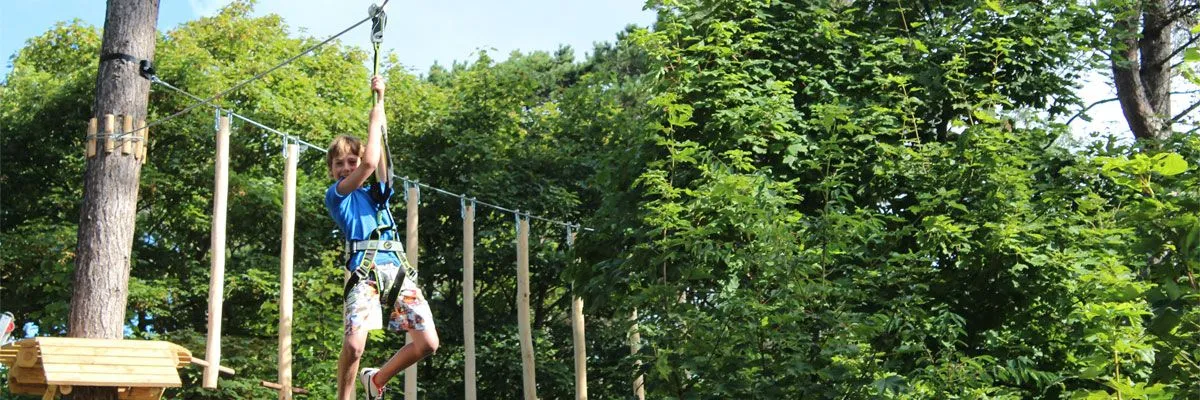
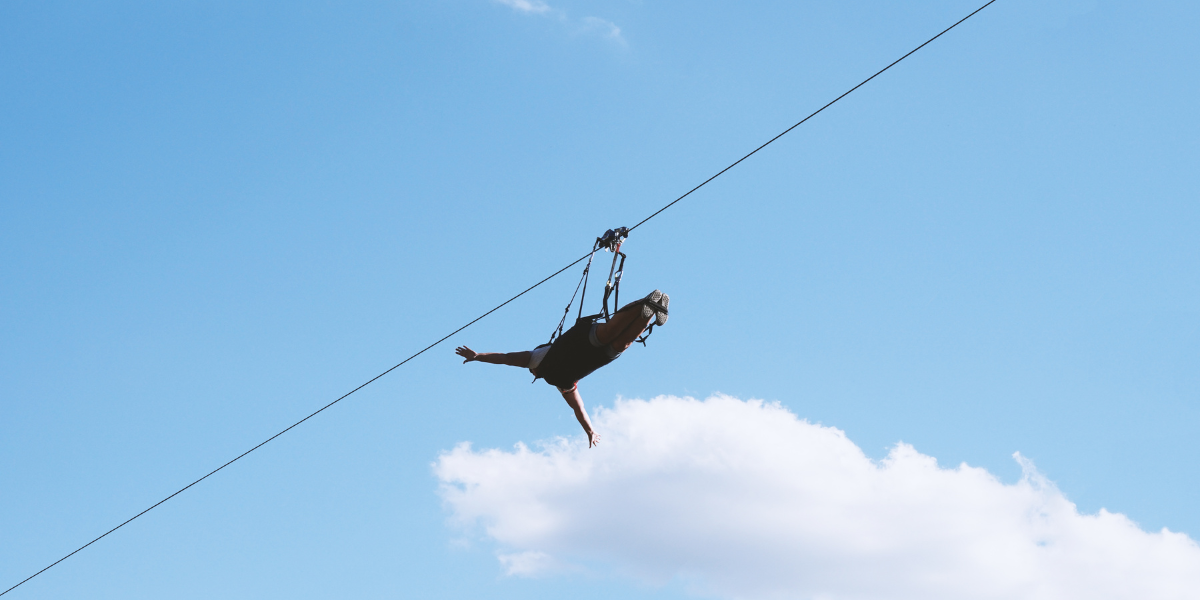
Rider descending a commercial zip line over a forested canyon

Commercial designs require rigorous cable sag and velocity analysis.

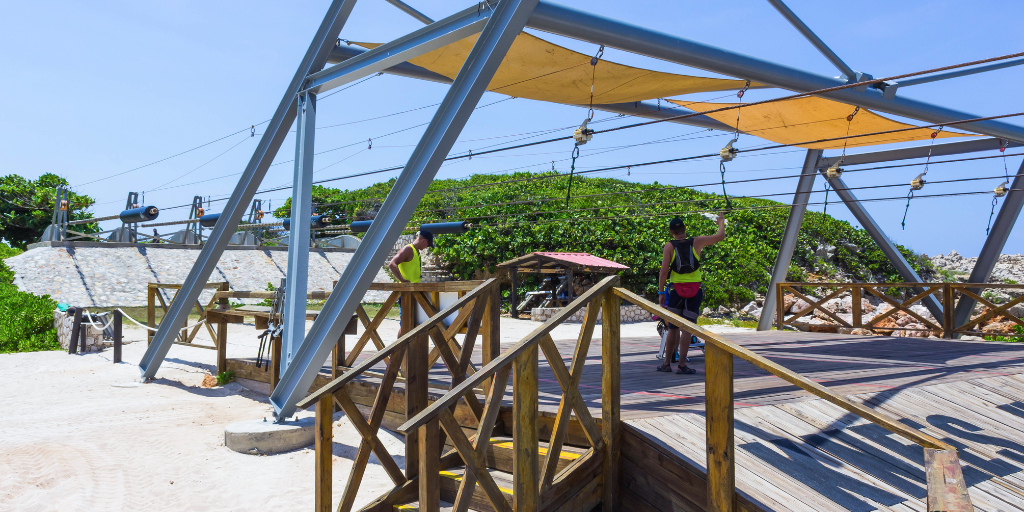
Many people are unaware of how sophisticated zip line design and engineering truly is. While backyard zip lines strung between two trees might be fun, commercial operations demand precision. One important factor is speed.

The velocity of a rider is determined by a complex interplay of variables: the design slope, rider weight, aerodynamics, trolley speed ratings, and even headwinds or tailwinds. The faster a participant travels, the more difficult it becomes to safely arrest their momentum at the arrival platform.

In the past, lines were often designed with a deep "smiley face" sag to utilize gravity for braking, leaving riders stranded in the center. Modern operations require higher throughput, precision slopes, and direct arrivals at landing zones where guests can disconnect swiftly and safely.

Project Management

Our 7-Step Implementation Process

 
1

Site Discovery & Exploration

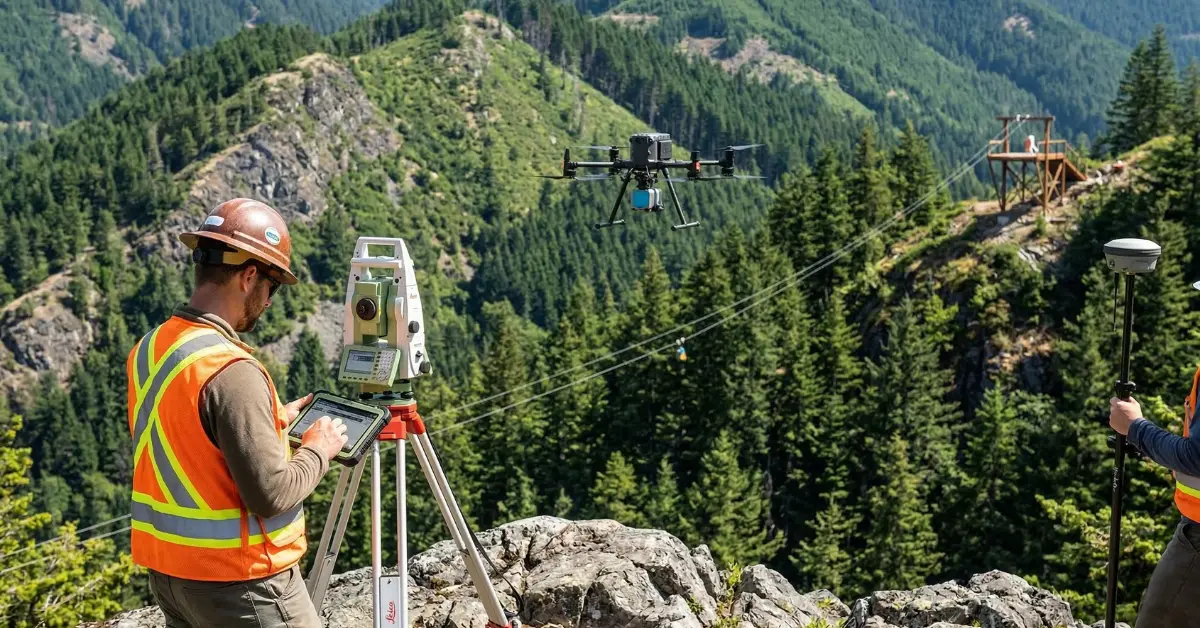
A commercial operation begins with feasibility. Trained personnel conduct a walk-through to determine potential take-off zones, landing zones, and anchor points. We analyze the physical topography alongside human geography—assessing visitor demographics and urban market access.

2

Location Design & Topography

Using schematic drawings, we finalize zip line corridors and account for functional topographical considerations. This phase aligns the physical build with the business strategy, defining ideal throughput rates and construction budgets.

3

Catenary & Clearance Analysis

Based on a thorough land survey, we conduct a catenary (sag) and clearance study. This dictates the exact ground line contour, tower height requirements, and ensures proper toe clearance for riders under various load and weather conditions.

4

Technical Engineering

Geotechnical, structural, and ride engineers verify all calculations. This includes structural force analysis, kinetic velocity modeling, crosswind stress tests, and secondary braking calculations to ensure complete compliance.

5

Construction & Installation

Prefabricated structures and cabling systems are assembled on-site by specialized builders. We utilize non-invasive installation techniques to minimize environmental impact and blend the attraction into the natural canopy.

6

Staff Training

Equipment is useless without capable operators. We provide 3–4 days of hands-on operational training alongside comprehensive safety manuals, ensuring your team can manage throughput and emergency procedures confidently.

7

Inspection & Certification

Before handover, our installers conduct rigorous dry runs and safety tests. We deliver certified engineer stamps and establish a schedule for technical inspections to maintain EN 15567 compliance throughout the product lifecycle.

Future-Proofing

Zipline Safety & Braking Technology

Perspective view looking down a high-speed commercial zip wire

Magnetic Eddy Current Braking

Historically, braking methods relied on participant interaction (glove braking) or unpredictable mechanics like bungee cords, which often fail or rebound violently. Today, safety relies on passive braking.

Modern zip lines utilize opposing magnetic forces, such as the ZipStop system, to slow riders down automatically. These systems use an internal Eddy Current Brake that applies progressive resistance without friction, heat, or cable wear. This ensures a smooth arrival regardless of the rider's weight or speed.

Emergency Arrest Devices (EAD)

An Emergency Arrest Device (EAD), or emergency backup brake, is an essential component of any high-speed zip wire system. It functions as a fail-safe.

The EAD is a secondary system that will automatically engage in the unlikely event that the primary magnetic brake fails. During the installation and certification phase, rigorous unmanned testing is conducted to ensure absolute synchronicity and function of both the primary brake and the EAD, protecting operators from liability and riders from injury.

Common Questions

Zipline Development FAQs

Can I build a commercial zip line myself using online equipment?

No. Backyard equipment is rarely rated for high-throughput commercial operations. Constructing a public attraction without certified zip line engineering exposes owners to severe safety risks and legal liabilities. Commercial builds require specific cable sag calculations, tower tension engineering, and certified braking systems.

What is the best way to brake on a zip line?

The industry standard is passive braking, meaning the rider does not have to actively participate to slow down safely. Magnetic Eddy Current braking systems (like ZipStop) are the safest and most reliable, applying friction-free resistance to halt riders smoothly, backed up by an Emergency Arrest Device (EAD).

How often do commercial zip lines require inspection?

While operators must perform daily pre-use checks, formal technical inspections are mandated by EN 15567 standards at least annually. High-volume parks often require bi-annual structural inspections to ensure cables, anchor points, and braking hardware remain within safe operating tolerances.

EN 15567 Compliant ERCA Certified Engineers Fixed-Price Feasibility

Ready to engineer your new attraction?

Our engineering team will assess your site, define the structural requirements, and produce a fixed-price proposal to launch your zip line business securely.

Related reading

More on zipline technology

Product Ziplines & Zipwires

Cable grades, span configurations and throughput planning for commercial zipline installations.

Product Bi-Directional Zipline Trolleys

Return-trip zipline technology that eliminates walk-back queues and increases hourly capacity.

Product ZipCoaster — Rollercoaster Zipline

A seated, track-guided zipline engineered for resort-scale throughput and sustained guest excitement.

Product category Thrill Adventures — Full Range

ZipCoaster, free-fall devices, adventure towers and the complete Skywalker thrill attraction lineup.

Product Zipline Brake Systems

Passive and active braking options matched to terrain profile, cable length and rider weight range.

Service Zipline Design & Engineering

What an engineered zipline specification covers — and why site-specific design protects your permit and insurance position.

Shop Order: Zipline Braking Systems

Certified zipline brakes for new installations and replacement orders.

Shop Order: Zipline Trolleys

Compatible trolley sets for standard and bi-directional zipline configurations.

Shop Order: Zipline Harnesses

EN 15567-compliant harness range for guest-facing zipline operations.

Turnkey planning Build Your Park

Planning a full destination with multiple zipline attractions? The Skywalker turnkey process starts with a fixed-price feasibility study.